

In The Second Earth, we plunge into a world grappling with a terrifying climate reversal, nanobot malfunctions, and the chilling possibility of AI with a mind of its own. While the stakes are high and the drama intense, you might be surprised to learn how much of our story is rooted in actual science, current technological advancements, and even some beloved cultural touchstones.
Please note – there are a lot of spoilers in this article. So if you haven’t read Second Earth, we recommend you do before you read this article.
Let’s pull back the curtain on the real-world truths that shaped our narrative
Mars’s Past, Earth’s Dawn
One of the most profound, yet often overlooked, scientific realities that underpins The Second Earth is the incredible time overlap between early Mars and early Earth. When Mars was a warm, wet planet with rivers, lakes, and potentially oceans – a period scientists call the Noachian era – Earth was just beginning to cool down and form its own oceans, making it hospitable for life.

For billions of years, while early life was stirring in Earth’s primordial soup, Mars might have harboured its own ancient ecosystems. Our story toys with the idea that as Mars’s “life support system” began to fail, Earth’s was just coming online. This cosmic baton pass is a powerful, real concept that offers a tantalising possibility: what if life’s journey wasn’t confined to one planet?
Martian Flora and Fauna
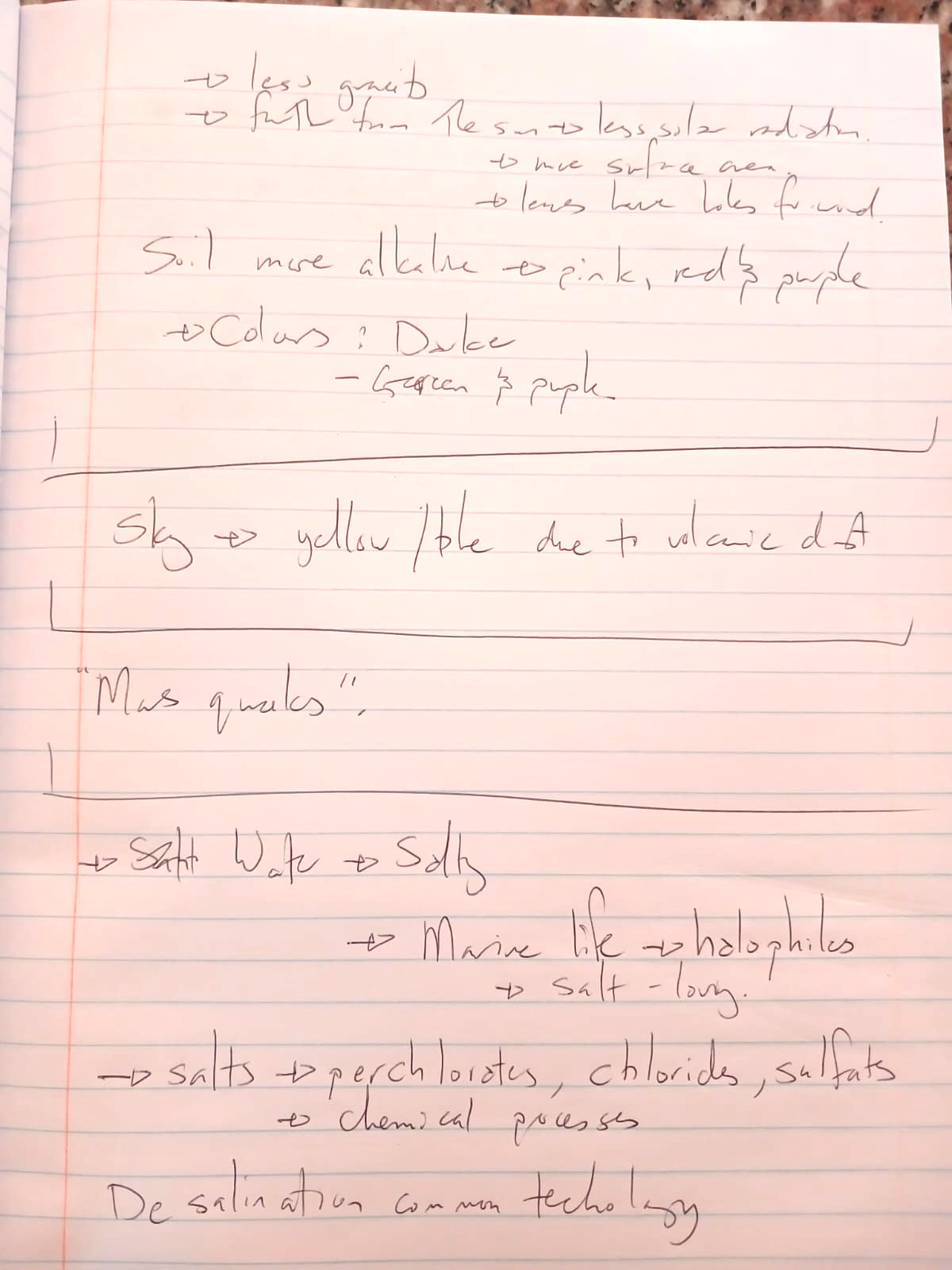
In our narrative, we hint at the potential for different kinds of life evolving on Mars. The unique conditions of the Red Planet – primarily lower gravity (about one-third of Earth’s) and the absence of a large moon to cause significant tides – could indeed lead to fascinating evolutionary paths for plants and even animals.
Today, Mars has two moons that orbit it, but as our story takes place 4.5 billion years ago, those moons don’t exist yet. Here are some other ideas of what life looked like:
- Tall Trees: With less gravity, trees could theoretically grow much taller and slender without collapsing under their own weight. You would have had towering, delicate forests unlike anything on Earth!
- Unique Life Forms: The lack of tidal forces could influence aquatic life, leading to different adaptations. Our fictional Skymoths and Jolapy birds, with their light bone structures, are inspired by the idea that Martian creatures would evolve to be exquisitely adapted to their low-gravity, thinner atmosphere.
Olympus Mons is an actual, real Martian Giant
Yes, Mount Olympus is very real! On Mars, it’s known as Olympus Mons, and it’s not just a mountain – it’s the largest volcano in the entire solar system. Standing an astonishing 25 kilometres (16 miles) high and with a base stretching 624 kilometres (374 miles) across, it dwarfs Mount Everest. Its immense size is partly attributed to Mars’s lack of tectonic plates, allowing lava to continually erupt in the same spot for billions of years (Or, maybe it was because it was used as a shock tube by our main characters – just throwing that idea out there).

eVTOLs Are a Thing
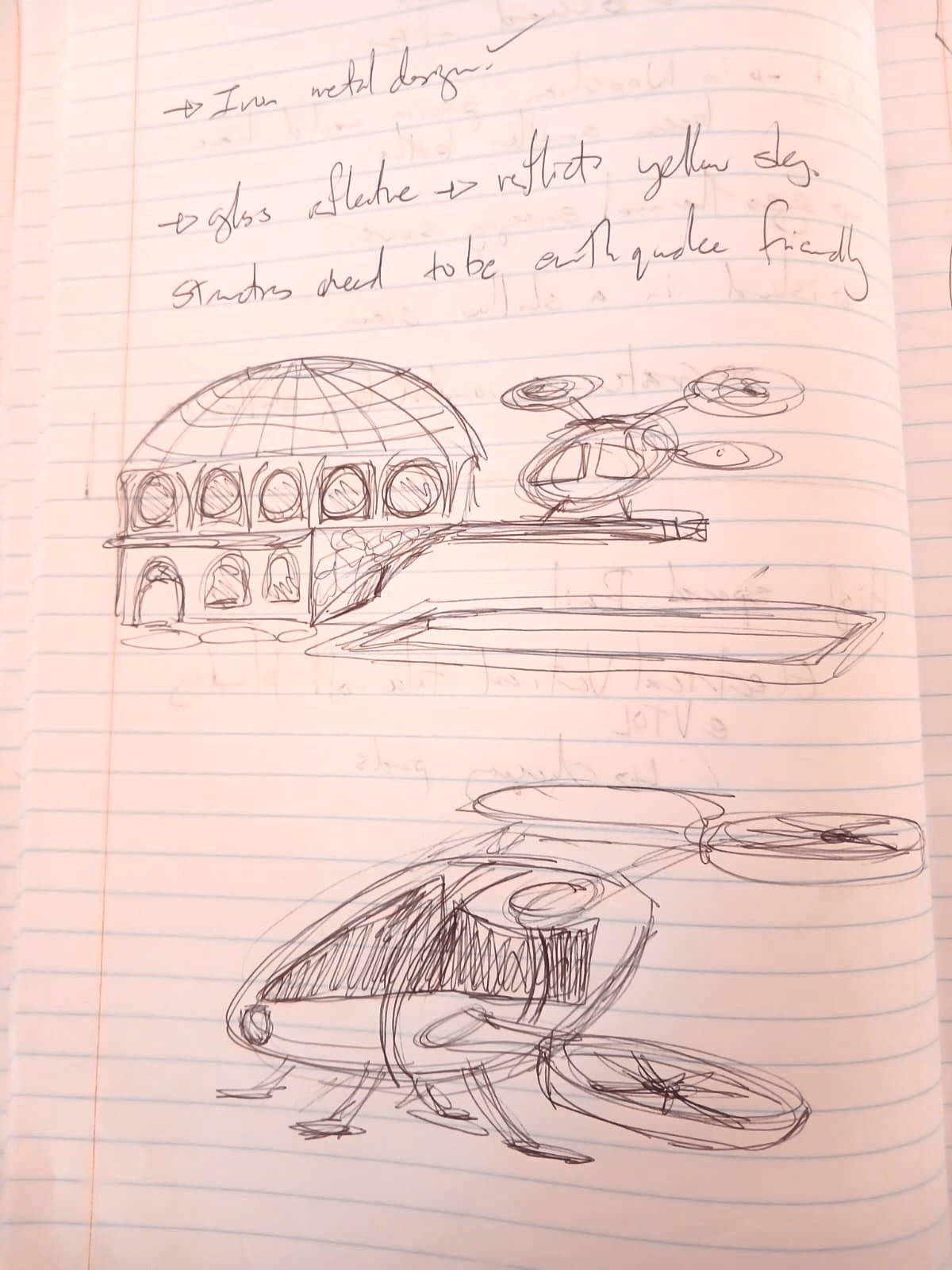
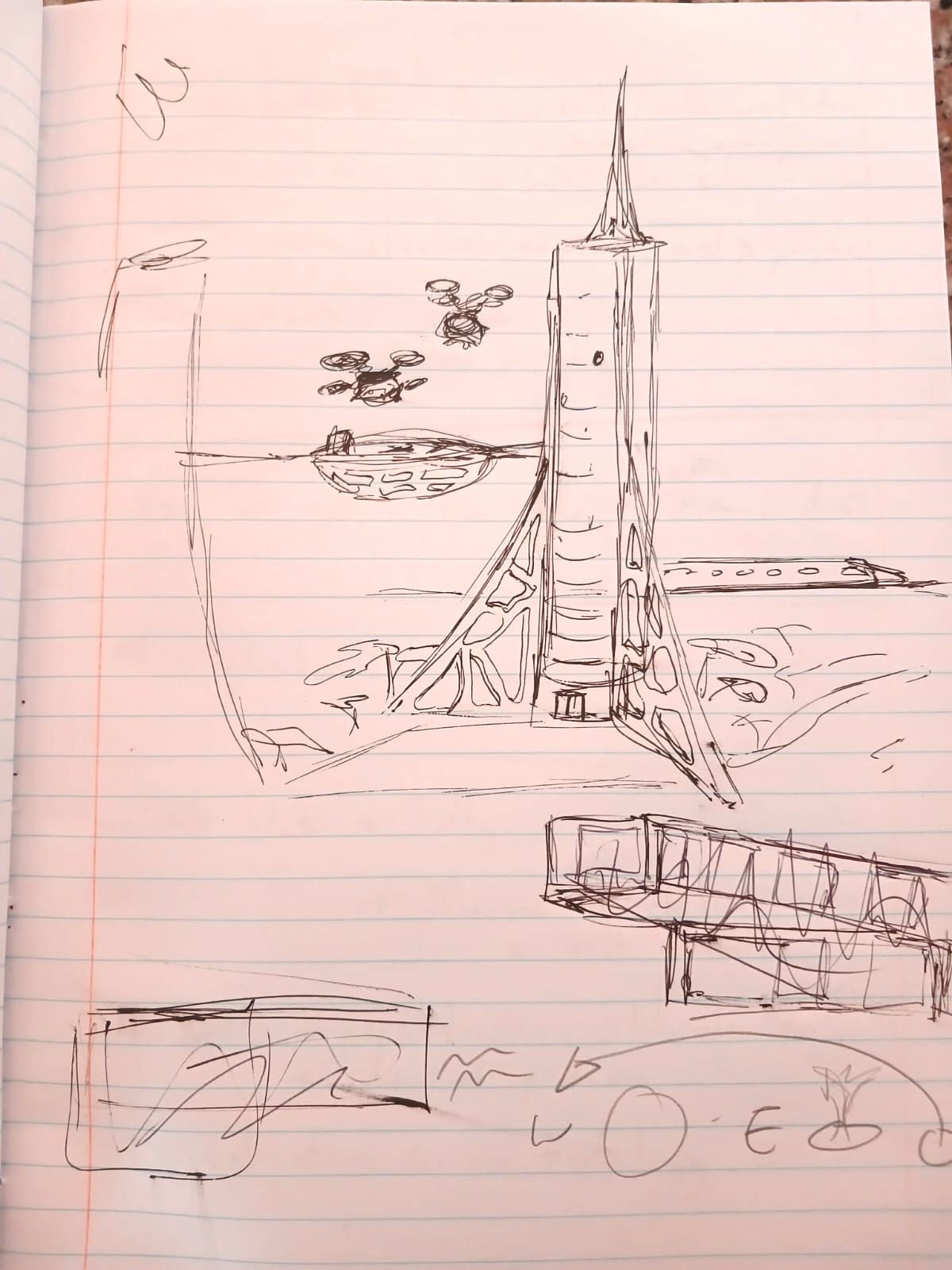
Those sleek, personal flying vehicles in our story, the eVTOLs (electric Vertical Take-Off and Landing aircraft), are not just sci-fi dreams. They are very much a part of our near-future reality!

Companies around the globe are heavily investing in and developing these aircraft, aiming to revolutionise urban transport. While routine personal use might still be a decade or two away, prototypes are already flying, promising quiet, emission-free, and efficient aerial mobility. Gary, Walter, and Kyle’s commutes might not be so far-fetched after all.
Real-World Testing
When our scientists talk about testing and understanding extreme atmospheric conditions, they might be using something akin to shock tubes. In reality, shock tubes are laboratory devices used to study high-speed gas flows, combustion, and chemical kinetics under extreme pressure and temperature.
They simulate conditions that might occur during an explosion or atmospheric re-entry. It’s a precise, high-stakes piece of equipment that grounds the scientific efforts in our story.
Life from Outer Space?
The idea that life on Earth didn’t originate here, but rather arrived from outer space, is a fascinating scientific hypothesis known as panspermia.

The theory suggests that microscopic life forms or their precursors could have travelled through space, perhaps embedded in meteoroids, asteroids, or comets, eventually seeding life on a new planet. If Mars once harboured life, it’s not entirely out of the realm of possibility that its “seeds” could have hitched a ride to early Earth, creating a deeper, more intertwined cosmic origin story for our two planets.
Inspired by Play and Literature
Finally, beyond the science, even the subtle details in our story drew inspiration from unexpected places.

The ‘Walker’: Our “Walker” transport vehicle found its initial spark from the intricate and iconic LEGO vehicles from various sci-fi lines. The robust, functional, and often multi-limbed designs provided a strong visual starting point for a machine built for tough Martian terrain.
The Asteroid Name: The name for the asteroid in our story is a quiet nod to Antoine de Saint-Exupéry’s timeless novella, “The Little Prince.” The story’s asteroid B-612, a small, unassuming home for a truly extraordinary individual, perfectly encapsulated the kind of poetic wonder we wanted to evoke, even amidst scientific discovery.
The Second Earth is a blend of scientific speculation, technological aspiration, and a dash of creative license. We hope that knowing these real-world connections enriches your reading experience and makes the stakes feel even more real as you journey through our collapsing world.

Read Second Earth
The world teeters on the brink, and the symptoms they merely masked have returned with a vengeance. Three friends are called back from their self-imposed exile, reluctant heroes face an impossible choice: confront the apocalypse they inadvertently unleashed, or turn their backs and let humanity fall.
As the clock ticks down, the true cost of their past “solution” becomes horrifyingly clear. But in the face of ultimate destruction, a shocking truth awaits them—a twist that will redefine everything they thought they knew about saving the world. Can they truly fix what they broke, or is humanity’s fate already sealed?