
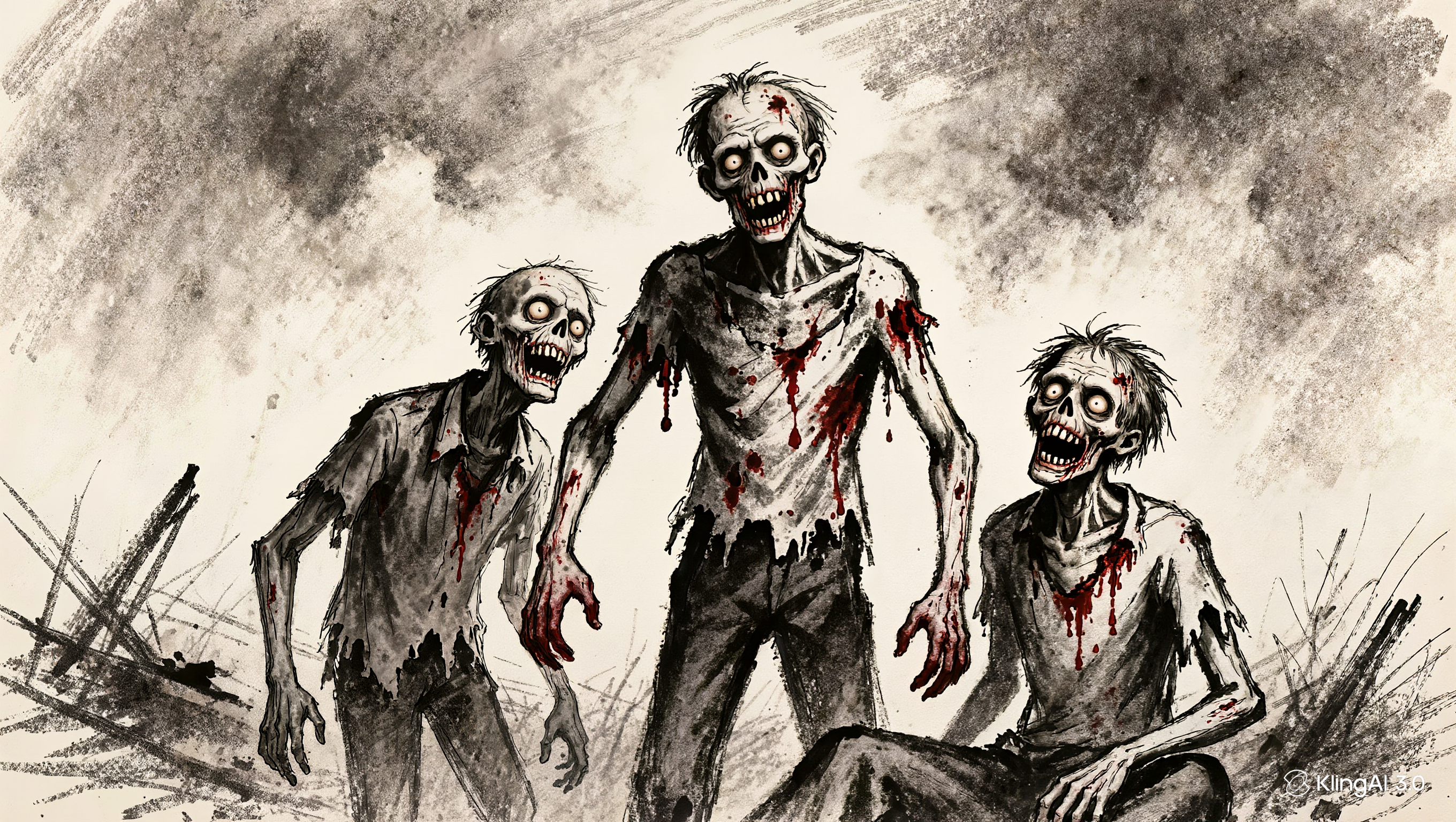
Welcome, aspiring learners, to the Post-Mortal Education Initiative. As you begin your studies into the unique biological state of the “Survivors,” it is essential to distance your perspective from the sensationalized media of the Old World. While these individuals are colloquially—and often derisively—referred to as “zombies,” their existence is a grounded xenobiological reality. This state is the direct result of a specific chemical and nuclear event involving the cross-contamination of experimental compounds—specifically Compound Omega and Neurotenin—during a period of global conflict.
To understand the Survivor, one must first unlearn the myths of the past and replace them with observed biological data.
Transitioning from Myth to Biological Reality
The primary hurdle for any new student is moving past the “monster” archetypes found in fiction. Survivors do not fit the predatory profiles of mythical creatures; they are conscious individuals existing in a state of suspended animation.
| Common Myth | Observed Reality |
|---|---|
| Vampiric Hunger | Survivors possess no fangs and exhibit zero bloodthirst. There is no requirement for biological sustenance or caloric intake. |
| Brain-Eating Instinct | Survivors find the idea of consuming human tissue “gross.” They do not eat brains or any other biological matter. |
| Mindless Monsters | Survivors retain full consciousness and deep emotional bonds. Their “syllabic-stripped” language is not moaning, but a sophisticated distillation of speech. |
| Immortal/Indestructible | Survivors are in a state of “dry decay” and will eventually reach a natural conclusion known as “The Drift.” |
While they may appear as monsters to the uneducated, their speech is actually more emotional and expressive than original human articulation. It is a language of “intensity levels” and “minimal spines,” forced by the physical limitations of their vocal cords.

Living Without a Pulse
The Survivor’s body operates under a biological “shutdown.” They remain animated, yet they lack the circulatory and respiratory functions that define standard human life.
Definition of Stasis: A state where individuals have no pulse and do not breathe. They “barely operate” in a traditional biological sense, yet they remain “alive in a sense,” fueled by residual chemical alterations rather than caloric intake or oxygen.
The Three Non-Vital Signs
- Absence of Pulse
- So What? Without a heartbeat, there is no internal circulation. This means cells cannot transport repair materials, nutrients, or white blood cells to injury sites, rendering natural healing biologically impossible.
- Cessation of Respiration
- So What? Survivors do not require oxygen to animate. However, the lack of moisture from breathing leads to the permanent dehydration of the mouth and vocal cords. This is the physiological cause of their “syllabic-stripped” language, resulting in their characteristic gritty, raspy, and emotional vocalizations.
- Minimal Biological Operation
- So What? Because the body is not “rebuilding” itself, every movement is a calculated expenditure of the body’s remaining structural integrity. Survivors must be deliberate in their actions to avoid catastrophic breakage.
This lack of internal biological movement creates a significant external problem: the body cannot fix itself, leading to the unique phenomenon of deterioration known as “Dry Decay.”
The “Dry Decay” Phenomenon vs. Traditional Decomposition
As a Xenobiologist, it is vital to distinguish between standard human expiration and the Survivor state. Traditional corpses “soggy-up” and “bloat” as they liquefy. Conversely, Survivor biology is characterized by a “dehydration process.” They become dry, brittle, and gray.
The Rot and Repair Philosophy
Because cellular regeneration is non-existent, Survivors live with the Permanent Tear. If a gash occurs, there are no living cells to bridge the gap. A common example of this hazard is the “lawn flamingo incident”—a simple trip over a plastic ornament can create a gash in the skin that will remain an open window into the dry muscle beneath for the duration of the Survivor’s existence.
Environmental Accelerators of Dry Decay:
- Rain and Moisture: Can cause the skin to become “fragile” or “tissue-paper-like,” making it susceptible to sudden tearing.
- Sun and Heat: Increases brittleness and leads to the skin “cracking like dry earth.”
- Physical Movement: Joints grind and skin stretches; without repair, the repetitive motion of walking can cause limbs to detach.
The Rot and Repair Shop: Tools for a Non-Healing Body
To maintain mobility and avoid being discarded by society, Survivors must engage in makeshift medical intervention. At centers like the “Rot and Repair Shop” (located underground near the docks on Hertzog Blvd), Survivors use hardware tools to perform the structural maintenance their cells can no longer provide.
| Repair Material | Primary Benefit for Structural Integrity |
|---|---|
| Duct Tape | The “skin” of the Survivor; used to hold gashes shut and keep limbs attached for years. |
| Steel Rods | Internal scaffolding; used as splints or internal supports when bones become too brittle. |
| Staple Guns | Used for heavy-duty tissue reattachment where adhesives fail to hold the dry flesh. |
| Super Glue | Provides a quick seal for smaller cracks and is essential for securing fingernails and hair patches. |
The Balancing Act of Movement: Survivors must maintain a careful equilibrium. If they move too much, they risk shattering bones. However, if they move too little, they succumb to Absolute Stiffness—a state of permanent rigor mortis. Avoiding this stiffness is a matter of survival; a Survivor must move enough to look “human enough” to hide in plain sight among the living, escaping the “monster” labels that lead to persecution.

The Final Mystery: Understanding “The Drift”
The “Drift” is the natural and inevitable conclusion of a Survivor’s journey. It is not a violent end, but a quiet, sensory transition. It is the point where the chemical bonds of Compound Omega finally release their hold.
Stages of Disintegration
| Stage | The Observed Reality |
|---|---|
| The Sound | A soft, gentle noise resembling a mouse scratching against wood or newspaper being scrunched into a ball. |
| The Movement | A slight movement or a few small ripples and jerks through the body as the cellular bonds fail. |
| The Result | The body instantly turns to fine dust, leaving no solid remains. |
Cultural Context: The Personal Object Survivors place immense value on “personal objects” from their former lives—trinkets like pocket watches, dog tags, or medical pins. These represent the individual’s soul and history. During a “Drifting Ceremony,” the community gathers to place this object in the individual’s hand. Once the Survivor has turned to dust, the object is pushed further into the dust to be hidden, marking the individual’s return to the earth.
The ritual is marked by a groaning, haunting elegy: “The Drift calls softly, cold and wide, a shadow’s tide where lost ones glide. We groan as one, for one who’s gone; we are bound together, we carry on.”
The Learner’s Summary
The Survivors exist in the “gray zone” of humanity. They are a testament to endurance, requiring no food or sleep, yet requiring constant maintenance to stave off the inevitable Drift. Every repair, every piece of duct tape, and every shared groan is an act of defiance against a world that has forgotten their history.
